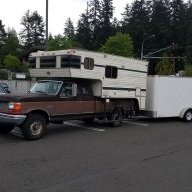
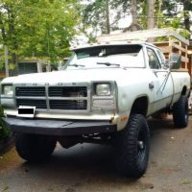
Old thread, but this is what I've been over thinking recently...
I'm currently replacing all my battery cables in my van. All started with taking out batteries for warranty, then replace the DC-DC charger on my cable, finding good deals on welding cable, and now have ripped all the 40 year old cables out of the van and working on installing fresh, 4/0 (posi starter) and 2/0 (parallel connect, and grounds).
my question is FUSES? Should I protect the new cable from short circuit in the engine bay? They lasted 40 years with no shorts, go another?
if so, I'm using Eaton MRBF Terminal fuses for my DC-DC 25' cable (75amps), and alternator (150-175amps). I could easily add another 250-300amp fuse between the batteries, but what about the 5' starter cable?
There are three important factors to selecting the correct wire.
Insulation, Conductor Count, and Conductor Type.
For our purposes in trucks we should only use Copper conductors, which leaves two other factors to consider.
Strand count,(higher is better) and insulation, (rated for application).
Welding cables have high flexibility, and a high strand count.
They are usually Neoprene, EDPM, or a PVC mix CPE. The drawback for auto use is the insulation, or "jacket", is soft, which is more susceptible to vibration damage and cracking in freezing temps.
Purpose made battery cables have a more robust jacket that gives added protection against vibration and impacts, and doesn't break down as badly as welding cables in extreme temps, hot or cold.
They usually have the same or higher strand count then welding, 1100+ vs 972.
NEVER use CCA auto cables, (Copper Clad Aluminum), as the Al doesn't conduct as well as the CU, and you have to derate by 1-2 wire sizes to equal the same CU load ability.
A wire I've used is called MTW, ( Machine Tool Wire)
It also has a high strand count, it's used for industrial equipment, and normally sold as AWM, (American Wire Manufacture, compared to AWG, (American Wire Gauge), AWG is sold in hardware stores for consumer use.
High strand count is critical for performance.
The higher the strand count means more surface area.
While this is vital in AC circuits, the increased surface area also works for DC circuits, especially when you're generating AC at your alternator, which generates EMF's that can cause a resistance to the flow of electrons.
The reason you should never use a 4/0 AWG cable is it only has around 76 strands, vs 4/0 MTW, which has at least 972 depending on manufacture, or CPE that start around 1100 strands.
To be honest, I've taken wire out of large commercial chiller and used to make cables for my hot rod that worked for years until I sold it.
A welding cable will work, but you'll need to be careful about routing, and very importantly, strain relief.
I would make a "Chinese Sock", type of Kellems Grip for any hanging vertical drops, (battery to starter), to help keep the wire from slapping around and destroying the insulation.
New EV cables have other properties that we don't need to address for our OBS rigs, and you don't need to spend the extra money.
I tried to keep it simple, but wanted to give you a decent idea of you options and risks.