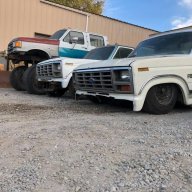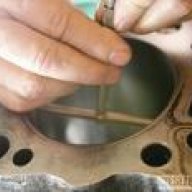
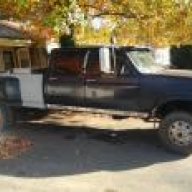
last shot with this truck, OIL STILL IN COOLANT

zmck150

Full Access Member
Joined
May 14, 2013
Posts
79
Reaction score
0
Location
rhode island
well to start off, I have tried everything I can think of to fix this problem and I am making it no where... to make things short I have a 93 f350 cclb drw 4x4 N/A 7.3 idi e4od with 389xxx on the dash and unknown on the jasper POS remanufactured engine. I was uneducated when I purchased the truck about 2 years ago and didn't notice any oil in the coolant... but it was there and now im stuck with this thing...

so what ive done so far
-replaced oil cooler gaskets and o rings (2x on the original cooler)
-replaced oil cooler with used one off a spare engine I purchased a while back for a build...
now there was absolutely no sign of oil and coolant mixing in the spare engine, so I thought that maybe the original cooler was bad or maybe I had a crack in the aluminum ears.. regardless I re-gasketed and put new o rings in it just to be safe.. still have oil in the coolant.
(yes I greased/ soaked o rings in oil and cleaned up the surfaces that made contact so there was no sharp edges or rust)
(I also made sure that the end caps were straight and the o rings were not being pinched or damaged in any way shape or form)

now for cleaning the oil out of the coolant
-ran cascade and water mix and drained the whole system (yes by the block)
-repeated about every three days for about two weeks after each time the oil cooler was removed

I loose about a quart of oil a week when daily driving it.. and my coolant hoses look like a time bomb just waiting to explode, ive only had one blow out from being oil soaked.. knock on wood

now I don't think its a head gasket because from what ive read, and been told the oil pressure in the head is less than the coolant system pressure so oil can not being entering through a head gasket or a cracked head. the truck runs great and starts great (when I have good glow plugs, shame on me for putting bosch)

where else could oil get in the antifreeze, but not antifreeze in the oil.. ive read some people have bad blocks because at some point there was a batch of blocks with some bad drilling that caused the wall between the oil jacket and coolant jacket to be very thin which cracks causing a whole mess of problems? ive also read something about the timing cover cracking and causing this to happen, but I could not figure out if they were talking about IDIs or 7.3 Powerstrokes in that article.

also another question I have is why is there only oil in my coolant but not coolant in my oil. after the truck is hot at at full running temp the coolant system is at 16 or 20 psi (I forget the spec so someone please correct me) and the coolant system stays at that pressure until it cools down, where as the oil pressure is only there when the truck is running. so in my mind I would think that when the truck is running the oil would mix into the coolant due to that pressure being higher, and then when the truck is turned off it would reverse since the oil pressure is zero.

any input, suggestions, ideas, anything is greatly appreciated (im at the point where I missed the whole plow season and im about to cut my losses and get a new truck) I need this truck to start working on the barn and do some land clearing now that all this snow is finally melting.
thanks in advance

 

Waystro

No Class
Joined
May 11, 2014
Posts
2,595
Reaction score
37
Location
South Texas
Maybe cavitation ? I would pull it and replace with a used one from Craiglist.

Or if you have the time/money a rebuild might be a option.

I would look for a 6.9 but that's just me.
 

BDCarrillo

Full Access Member
Joined
Jul 19, 2014
Posts
1,245
Reaction score
10
Location
Abilene TX
Cavitation would put coolant in the oil (I think), not oil in the coolant as he's experiencing.

Doing a mental runthrough of the coolant system I figure that right at the coolant return passages (front corners of the block) you have a bit of suction from the water pump. A weak headgasket in this area mayyy allow the pump to suck some oil through.

The timing cover doesn't have oil flow through it, and only sees a small splash of oil on the backside from lube climbing the timing gears and a teensy bit flung off the crank. I don't suspect your crossover is happening at the cover.

Also, operating under the assumption that our coolant systems are always at 13 psi isn't accurate... that's just a safe max. If yours is constantly operating at a pressure lower than the oil pump, that may explain how you are losing oil.


Off the wall theory: transmission fluid cooler built into radiator is leaking, old dark fluid looks like oil. Motor oil consumption unrelated. (A quart a week means you're adding a gallon per month of fluid to the coolant system... is it constantly overflowing?)
 
Last edited:

Agnem

Using the Force!
Joined
Jan 10, 2005
Posts
17,067
Reaction score
385
Location
Delta, PA
I disagree that a head gasket could be ruled out. Depending on the gasket installed, there could be rubber grommets around the oil and coolant passages which are not that far away from each other. It's not inconceivable that one of those could tear, resulting in a sort of one way valve that could emit oil but not allow coolant in. And the oil pressure is definitely higher than the coolant pressure. 20-60 PSI when running versus 12-16 PSI in the cooling system. The oil cooler thing would be very frustrating, but if your not testing them on a jig before installation, then its a shot in the dark.
 

BDCarrillo

Full Access Member
Joined
Jul 19, 2014
Posts
1,245
Reaction score
10
Location
Abilene TX
Retorqueing your head bolts may stop it. It's a long shot but not difficult to do.
 

OLDBULL8

Good Morning Ya'll.
Joined
Feb 12, 2009
Posts
9,923
Reaction score
342
Location
Delphos , Ohio
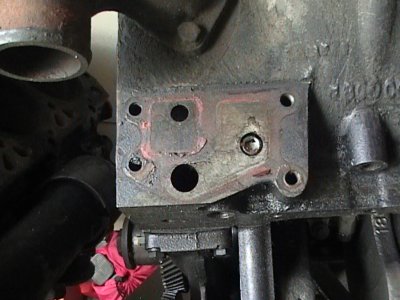
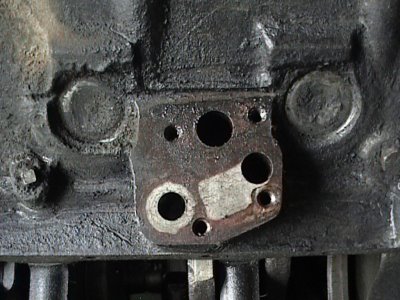
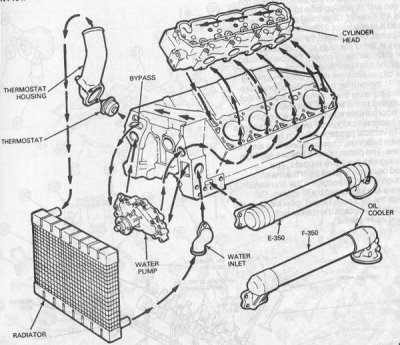
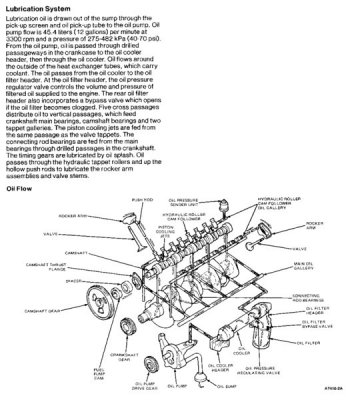
Do you remember if there is a plug in the front header? Surely your using new gaskets each time you pull the OC off. There was a member a while back that had that plug missing. The gasket covers that hole, but with the difference in pressures (coolant Lo as opposed to oil Hi) it might be possible that oil is getting into the coolant there since it's only a quart per week. Just a suggestion. See pic, 1st shows the front OC header, 2nd is the rear, 3rd pic is the oil passages. 4th is the coolant passages.
EDIT: Pics switched around when editing. There self explanitory tho.

EDIT: That plug blocks off the hole used for drilling the crossover passage between the oil galleries.

Those gaskets can easily mislocate, when working under the truck.
 

Attachments

  • 080.JPG
    080.JPG
    303.5 KB · Views: 14
  • 081.JPG
    081.JPG
    292.7 KB · Views: 15
  • 7.3 IDI Coolant_flow.jpg
    7.3 IDI Coolant_flow.jpg
    67.3 KB · Views: 17
  • 7.3 oil passage.jpg
    7.3 oil passage.jpg
    77.9 KB · Views: 18
Last edited:

riotwarrior

Full Access Member
Joined
Sep 19, 2006
Posts
14,782
Reaction score
492
Location
Cawston BC. Canada
I disagree that a head gasket could be ruled out. Depending on the gasket installed, there could be rubber grommets around the oil and coolant passages which are not that far away from each other. It's not inconceivable that one of those could tear, resulting in a sort of one way valve that could emit oil but not allow coolant in. And the oil pressure is definitely higher than the coolant pressure. 20-60 PSI when running versus 12-16 PSI in the cooling system. The oil cooler thing would be very frustrating, but if your not testing them on a jig before installation, then its a shot in the dark.
Mel,

Please correct me if I am wrong here, but there is NO pressurized oil going to the head. It is just a return flow so crankcase pressure level only correct?

I'm going to toss a guess out here, but what about a cooler gasket slip on install causing oil to flow into coolant?

How about a nick on the header surface or block surface? Nick in O ring surface in cooler head?

Any time you do a gasket where there is a fluid oil or coolant or what ever gasket, regardless of what it seals, the surface areas MUST...MUST be surgically clean.

For any gasket like on the cooler I am a profound believer in a coating of elephant snot on the block and on the cooler headers. Then torque to spec and allow set if doing your own job for 12 hrs...then add the coolant and oil. Sometimes the allow set cannot happen and you must jump to GO mode...that's ok too done both. I just like to let sit!

Remove radiator have it chemically cleaned maybe some oil might be caught up inside the tanks you are not getting out?

Just tossing ideas...

I DO NOT thin it's a headgasket BTW.
 

OLDBULL8

Good Morning Ya'll.
Joined
Feb 12, 2009
Posts
9,923
Reaction score
342
Location
Delphos , Ohio
Brian; Look at the pics I posted above. Oil comes up thru the push rods under very little pressure, oil pressure is restricted by the small holes in the ball on the ends of the push rods. then just flows back to oil pan thru cast openings in head and block.
 

icanfixall

Official GMM hand model
Joined
Apr 10, 2005
Posts
25,858
Reaction score
682
Location
West coast
A head gasket leak will send unburned diesel into the cooling system but then again you wont be loosing oil like you posted. Thats really not a lot of oil loss either. I suggest another set of eyes on both the front and rear header for nicks that can damage the o rings. I recall you replacing the oil cooler but how much was reused on the engine. the headers or the bundle? How are you installing the headers? Have you taken apart the oil coolers and found any damaged o rings or seen any cracks in the headers or nicks? How are you sticking the header gaskets to the block or the headers. Never attempt using RTV. When its wet it very slippery and WILL squeeze out a tiny gasket like the header gaskets.
 

stealth13777

Full Access Member
Joined
May 28, 2014
Posts
493
Reaction score
37
Location
Jacksonville, FL
Don't forget the possibility of xmsn oil mixing with coolant in the rad. With the engine just burning some oil. Maybe not super likely, but seen it before. Think it was mentioned above.


Sent from my iPhone using Tapatalk
 

PwrSmoke

Full Access Member
Joined
Jan 2, 2007
Posts
807
Reaction score
23
Location
Northwest Ohio
To my mind, the oil cooler and related are really the only place a mix like this can happen. This might be a time to build and use that oil cooler pressure test fixture outlined in the manual. There might be a place in the block where a crack could cause something like this, but never heard of it on these engines. That would be difficult to diagnose. Make sure the cooler is 100% in every respect, no shortcuts, and eliminate that as a possibility. Then move on to other more dire possibilities.
 

yARIC008

Drives really slow
Joined
Jan 12, 2005
Posts
1,703
Reaction score
110
Location
Orlando, FL
When my motor cavitated through it i had oil in coolant and coolant in oil. I would clean the radiator with water, soap, etc, etc. get it perfectly clean, then run the engine for five minutes and the coolant system would be full of oil again. I had tried replacing oil cooler rings first. I thought it was a bad head gasket. Pulled engine and replaced head gasket, and then found out it was cavitation after pulling it a second time.
 

zmck150

Full Access Member
Joined
May 14, 2013
Posts
79
Reaction score
0
Location
rhode island
Do you remember if there is a plug in the front header? Surely your using new gaskets each time you pull the OC off. There was a member a while back that had that plug missing. The gasket covers that hole, but with the difference in pressures (coolant Lo as opposed to oil Hi) it might be possible that oil is getting into the coolant there since it's only a quart per week. Just a suggestion. See pic, 1st shows the front OC header, 2nd is the rear, 3rd pic is the oil passages. 4th is the coolant passages.
EDIT: Pics switched around when editing. There self explanitory tho.

EDIT: That plug blocks off the hole used for drilling the crossover passage between the oil galleries.

Those gaskets can easily mislocate, when working under the truck.


I did check them after the first time I did the oil cooler, everything was where it was supposed to be, and I also made sure they were tight. using new gaskets each time and making sure they were in the correct place too by feeling and looking with a light and a mirror. the bolts pressed through without a struggle as if they were lined up perfectly
 
Top