

DaytonaBill
Full Access Member
In this thread, we were talking about R290 and R600A for our Air Conditioning systems on our trucks and the subject of insulating the 'Heater/Evaporator Box' (referred to here, as "junk") came up.
A few of the members have insulated their junk with 'Frost King' rolls that are R-3 rated. So I thought that this method of insulating the junk from the hot underhood temps would help bring the A/C temps down more, as these members have done.
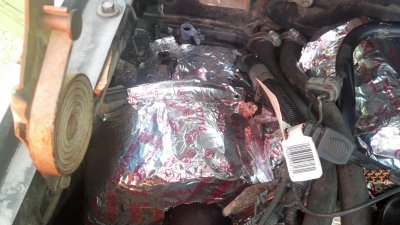
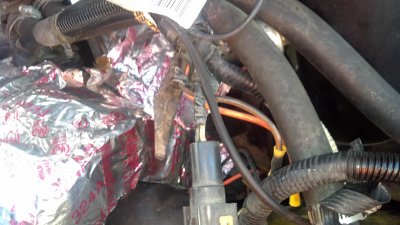
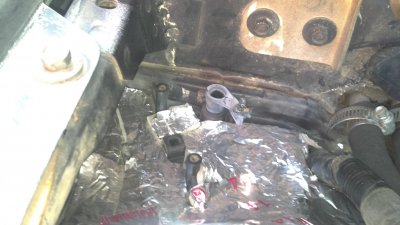
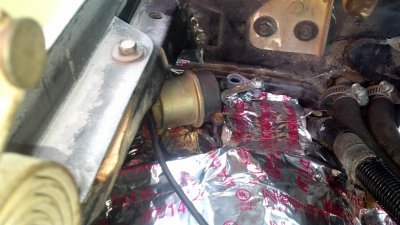
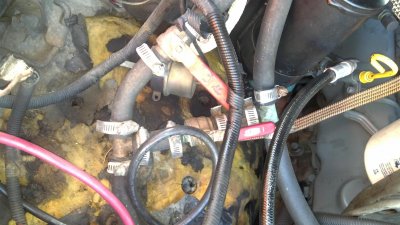
And so I installed a single layer of the 'Frost King" (click this linky to see the insulation)... It took about a hour.
I decided to document how well it worked by running the vent (air from the cowl) on my way to work yesterday.
It was 6 in the morning and about 75 outside. I had a 35 mile trip to work and I have a inside outside thermometer in my dash. The remote probe for reading outside temp is shoved a few feet down the driver's side center vent. So for my application, 'inside' is the temp in the cab and 'outside' is the temp a few feet down the ductwork.
When I started the engine, inside was 75 and outside was (ductwork) 79.
Fifteen miles and fifteen minutes later, it hit 100 and leveled off to 103 for the rest of the trip. I stopped at a store and when I left, I turned on the A/C and by the time I got to the job, it was down to 48 within five miles of travel.
after work today, I'm going to install a second layer and report back on the results Monday, after work. I will take the same route and replicate the same driving conditions as yesterday.
Of course, I would appreciate any discussions of using alternative means of insulating your junk, so fire away!
A few of the members have insulated their junk with 'Frost King' rolls that are R-3 rated. So I thought that this method of insulating the junk from the hot underhood temps would help bring the A/C temps down more, as these members have done.
And so I installed a single layer of the 'Frost King" (click this linky to see the insulation)... It took about a hour.
I decided to document how well it worked by running the vent (air from the cowl) on my way to work yesterday.
It was 6 in the morning and about 75 outside. I had a 35 mile trip to work and I have a inside outside thermometer in my dash. The remote probe for reading outside temp is shoved a few feet down the driver's side center vent. So for my application, 'inside' is the temp in the cab and 'outside' is the temp a few feet down the ductwork.
When I started the engine, inside was 75 and outside was (ductwork) 79.
Fifteen miles and fifteen minutes later, it hit 100 and leveled off to 103 for the rest of the trip. I stopped at a store and when I left, I turned on the A/C and by the time I got to the job, it was down to 48 within five miles of travel.
after work today, I'm going to install a second layer and report back on the results Monday, after work. I will take the same route and replicate the same driving conditions as yesterday.
Of course, I would appreciate any discussions of using alternative means of insulating your junk, so fire away!







 sorry, the Northerners will get this.......


 ). Second, I'm pretty sure it's supposed to keep hot air from escaping the engine compartment through that seam and letting that hot engine compartment air be sucked into the cowl. So, if that seal's missing and especially if the rear of the hood is sticking up any, that could be a big part of why you're getting hot air in the cowl, and therefore into the vent.