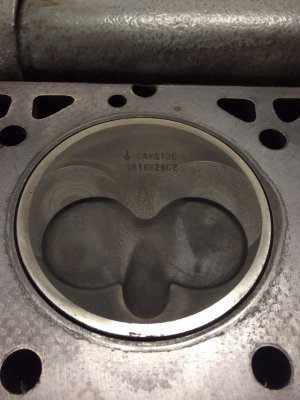
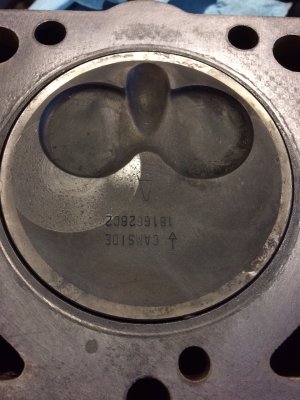
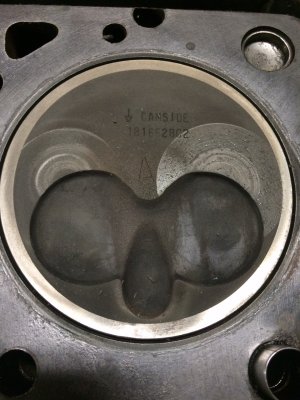
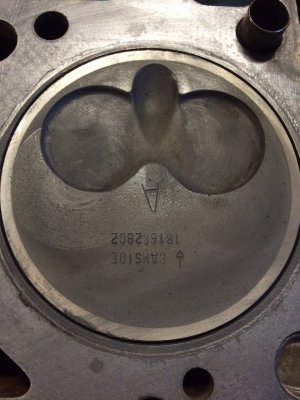
They are and were sourced from the AERA (Automotive Engine Rebuilders Association) bulletins on the 6.9-7.3L engines, or from factory manuals. Machine shops are usually AERA members, so he should have access to the AERA database for confirmation.
The only part that's "off the reservation" is head thickness. AERA still (last I checked) sticks with the factory head thickness number. Many of us here, and machinists, have long gone farther... judiciously. I'm about 0.012 under that spec now and icanfixall is running a couple of engines in the same ballpark, as is, I think, typ4. If the valve recession specs are set right (at the deep end the more you are worried) and piston protrusion isn't excessive, it seems to work. I was so paranoid during my overhaul that I installed the new heads (with light test valve springs installed) with shims that mimicked compressed head gasket thickness. I install clay on the piston tops under the valves to measure how close the valves got to the piston and rolled the engine thru several revolutions. Plenty of clearance in my case. The light valve springs eliminated the possibility of the springs compressing the lifters. In fact, the light springs probably simulated a worst case where the lifter might be pumped up past their preload position by excess oil pressure).
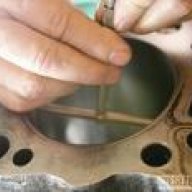
I don't know if the machinist has just the heads or the whole engine, but if he has just the heads, make sure you check piston protrusion. That's an important part of the equation and if you have a lot, it will effect what the machinist can and will do to the head. Here's a pic of when I checked my engine during a test assembly.
I used the dial indicator to make sure the piston was at TDC then used the depth gauge to measure protrusion. Again, it was 0.016" on my engine, which was very much a relief.