Use the "attach files" button at the bottom, left of the orange "post reply" button. You will open a file manager. You will need to know the file name of your photo and where it is.
A note on solder. You want 60/40 ( Tin/Lead ) or 63/37 ( Eutectic ) solder, Rosin core ( For electronic work ). You do NOT want plumbing solder ( acid core , often 40/60 or 50/50 ). Acid core is corrosive and you will have problems later.
Disintegrated green copper powder where the cable used to be.
The good stuff we used to use is no longer sold because of it's lead content. But that tin/lead alloy was the best we had for a good metallurgical wetting.
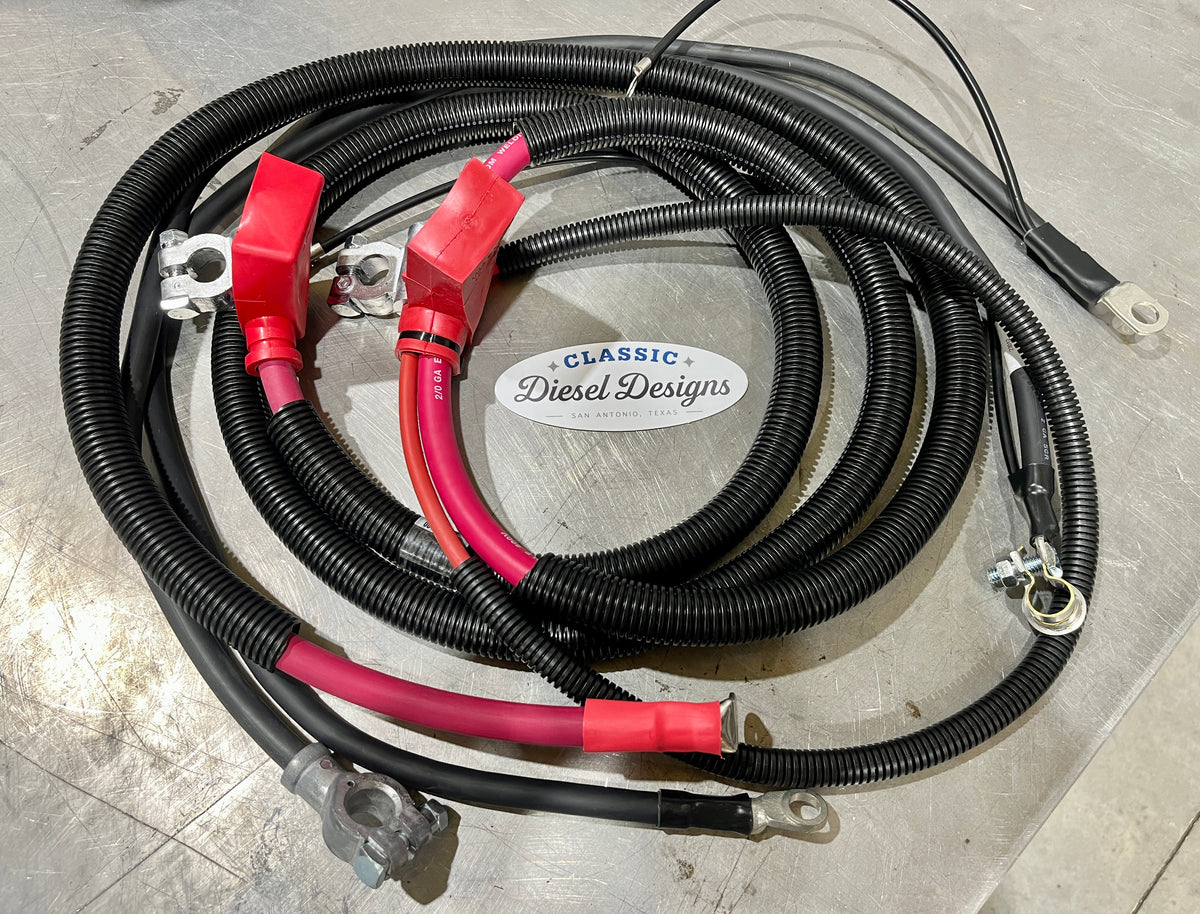
When I have had to do lug attachment for severe environments, I strip and tin ( saturate with solder ) both the stranded cable end, and the interior of the lug after a good mechanical cleaning with sandpaper, use plenty of flux and solder to tin the inside. While still hot, I pick up the hot lug and fling it onto the floor to remove excess molten solder and flux residue. When it's cool enough to handle, I inspect my tinning job to verify I have a good "wet", that is, I have a nice thin layer of fresh solder all over the inside surface of my lug. I also verify the strands of my copper cable are also thoroughly wetted. Try not to mess up the "lay" of the wire, so the wire doesn't splay out and create voids. If I am trying to tin old wire, it may take me several tries using fresh flux and solder to get a good solder wet on the strands. Reinspect and re-do until you get it right.
What I am after is the clean hermetic seal the subsequent soldering of lug to wire will provide. If any water gets in there, I am just setting myself up for future misery.
Once I am convinced the wire and lug are properly wetted with fresh solder ( if the solder is forming balls and voids, that is NOT an acceptable wet. It should smoothly coat the surface and drip off at the lowest point. If the solder is balling up like water on wax paper, it ain't wet. Needs better cleaning, more flux, and another try.
Now assemble the wire onto the lug. Trim excess. If loose, crimp. Then reflow the solder, with more flux and more solder will wick in, filling any voids in the connection with liquid solder.
Again wipe away excess with a rag, let cool, inspect and clean up rough edge, and do the heat shrink tubing for a finishing seal.
Back to the solder:
I haven't had much success with these new lead free solders. Seems like some sort of metallurgical incompatibility. The joint won't wet right, and comes out brittle.
Now, the element Tin ( Stannum, Sn ), is getting expensive. Today's solder has a lot of tin, and they keep trying to find other metals to replace lead. I haven't found anything that works as well ( metallurgically speaking ) as lead does as far as intermetallic bonding/wetting.
The big boys won't touch it. It won't meet ROHS Lead-Free standards. No one is going to be eating electrical connectors anyway. Do this right and you will never have to do this again.
Old school lead based solder can still be found on eBay, usually as partial spools like someone bought an old fixit shop and selling off the pieces. I have bought close to 100 pounds of mixed solder remnants off eBay.
I got it cheaper by accepting mixed lots of scrap solder, as I also use solder for other things.
For now, most people are using the new stuff and eBay has an ample selection of small quantities of odds and ends of various solders. Do not use acid flux solder.
Search eBay for "vintage 60/40 solder". And a fresh tin of rosin paste flux. The solder alloy is a metal. It doesn't age. I have seen rosin lose potency with age and the solder fails to wet as expected. The old solder may have surface oxidation. Upon melting, this rises to the surface along with the flux residue and should be wiped off while the solder is still molten, leaving behind a clean well wetted shiny joint. Not only is the solder a conductor of electricity, it is also a water displacer ( filler of voids ), as well as offering mechanical support. The ideal is to keep any battery acid from ever wicking up the copper battery cables.
One other thing I have seen coming out: "CCA wire". That isn't Cold Cranking Amperes. It stands for "Copper Clad Aluminum". It looks and feels like solid copper. But the underlying aluminum does not have the physical or electrical characteristics of pure copper.
Solder will dissolve copper. That is why it wets with a strong intermetallic bond. There is secondary alloying going on inside a solder joint. Ever tried to solder onto aluminum? For me that has been tricky at best. The fact solder does dissolve copper is why I have to keep changing tips in my soldering tools. The liquid solder keeps dissolving them!
I got fooled with some CCA wire by trying to solder it to a connector, only to discover I could not tin the wire properly. Turns out I was washing the copper cladding off with liquid solder, and the remaining aluminum did not have the intermetallic properties to bond at the aluminum-copper interface.
I could not trust anything I made with that wire. Crimp only. Bad news. Aluminum does not spring back like copper, and dimensional recovery from thermal cycling accelerated connection failure. It's the reason they no longer wire houses with aluminum wire. Too many fires.
@snicklas :
I probably put this post in the wrong place; I just wanted to share things I have learned with this community. Maybe I can save someone else a do-over, and, more important, why.