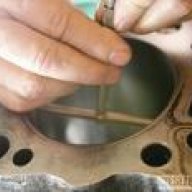
we always see pistons getting ceramic coated.
true that the aluminum has a lower melting point than iron.
why dont we ceramic coat the valves and combustion chamber also?
theoretically makes sense to me since this is where most of the heat is generated..
what are your thoughts?
The heat is 'generated' in the combustion process but I know what you meant.
Yes it makes a lot of sense along with the ceramic coatings on the surface of the head. I think we may see the coated valves soon.
I'm posting a link to an interesting study further below.
I started a long reply about this last night while also researching it further, left the computer on while I slept and finished it today. I hit the button to post it and a SNAFU in the forum software rejected it with a message containing something like, '.. logging in after logging in hit the backspace button. I did and my work was lost forever.
Anyhow, below is the url to a full text article published in an engineering journal June 2014.
Ceramic treated (piston, head and valves) diesel engine compared to an identical non-treated engine. It's a study that focuses on emissions but also shows increased power with reduced fuel consumption.
The results were surprising to me with substantial improvements in the treated engine on every measure. I was also impressed with how well the biodiesel fuels performed.
Read it carefully. The first long paragraph is the abstract and the rest of the document explains the entire study and what it means. On the 7th page (labelled 5) are the conclusions. It's an easy read to that point. The rest of the article to page 18 shows graphs, a few photos and over a page of reference citations to related research.
I only gave this article one quick read last night.
See my comment about the exhaust gas temperatures (EGTs) in the treated engine -> that comment is in my previous post.
Also, the graphs are simple to understand- just remember that better performance in the graphs is ALWAYS the ceramic treated engine- and the higher EGTs in the treated engine are a GOOD thing- you have to see my previous comment on that or you'll figure it out in the article.
I am not a professional mechanic, just a back yard mechanic with a technical background that allows me to at least understand a lot of this more advanced science and technology.
I suggest focusing on what the abbreviations are for. They are in the article but the translators could have done a better job of organizing that part.
Here is the list of the abbreviations used which appears later in the article:
NOMENCLATURE
CO - carbon monoxide
HC - hydrocarbons (ppm) (ppm = parts per million)
CO2 - carbon dioxide
B5 – 5:95 of biodiesel to diesel fuel mixing ratio
B10 – 10:90 of biodiesel to diesel fuel mixing ratio
B100 – 100% biodiesel
BSFC - brake specific fuel consumption
YSZ – yttria - stabilized zirconia
LHR - low heat rejection
SE - standard engine
KOH - potassium hydroxide
EGT - exhaust gas temperature
BTE - brake thermal efficiency
The Effect of Ceramic Coating on Performance and Emission of Diesel Engine Operated on Diesel Fuel and Biodiesel Blends
http://www.iasj.net/iasj?func=fulltext&aId=89557
I will not be surprised if ceramic coatings in engines (diesel engines in this case) become required by Law in the USA, based on the substantial improvements in emissions and better fuel economy.