6.9 IDI valve train questions + head gasket job

8769bigred

Registered User
Joined
Nov 5, 2024
Posts
46
Reaction score
20
Location
Portland Oregon
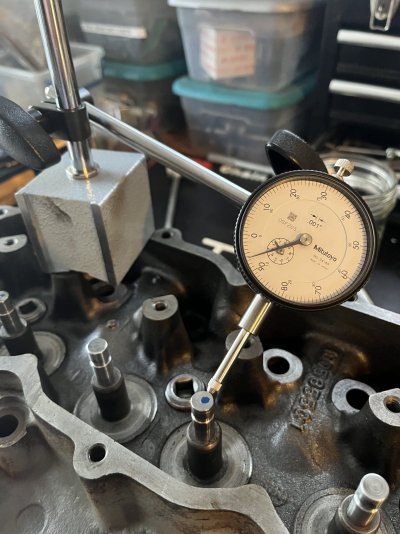
Ok so I went back to the drawing board for the valve guide measurements. I ditched my harbor freight dial indicator and got a good one. Iv slowing been buying Mitutoyo measuring tools over the years and now I had a need for a primo dial indicator. It worked ALOT better.

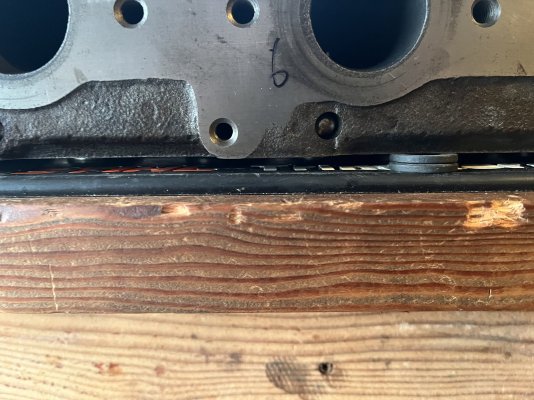
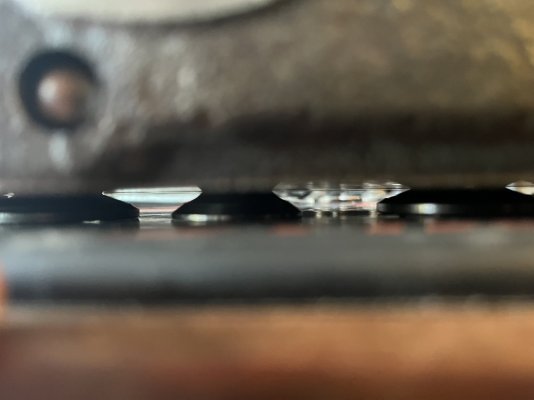
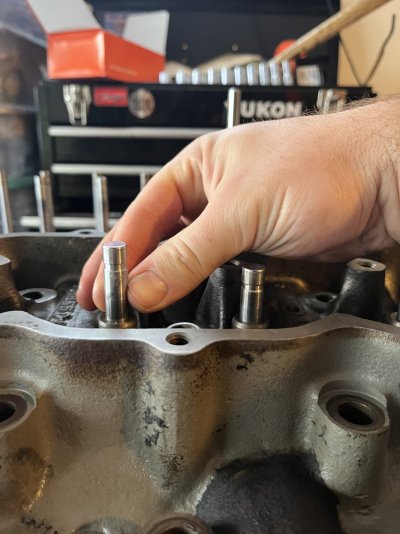
I also devised a strategy to deal with not having the ford valve stem spacer tool. I spaced the head off my bench with flat washers to give the valves more room to drop. I spaced the valves down into the guides to the point where the wear marks were no longer visible. I then measured all the guides the same way. Push valve towards indicator and zero. Pull valve straight towards me and record, divide value by 2.

This seemed to be a better strategy than leaving the heads flat on the bench. This method allowed the valves to walk in the guide more. I’m not sure if this is as far down as the ford tool lets the valves go. If I had the valves LOWER than the ford tool would allow my measurements should show more wear than I actually have.

I also feel like it’s easier to do consistent repeatable results compared to the hole gauge method.

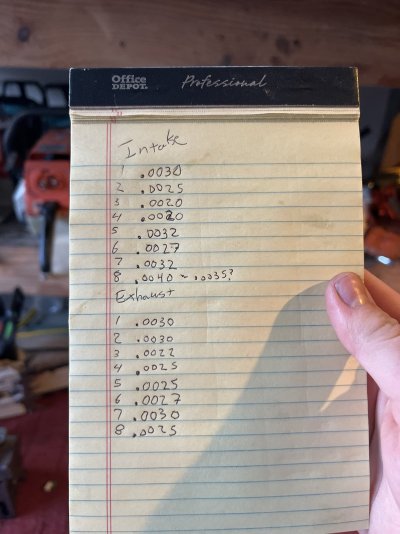
Based of my results I think my guides are good to go. I had one suspicious intake valve that I had a hard time getting a good read on. Some times .0035 some times .004. This is close to the .0055 wear limit.

Here’s my results for the rest of the guides
 

Attachments

  • IMG_9071.jpeg
    IMG_9071.jpeg
    313.8 KB · Views: 3
  • IMG_9069.jpeg
    IMG_9069.jpeg
    355.4 KB · Views: 3
  • IMG_9070.jpeg
    IMG_9070.jpeg
    157.3 KB · Views: 3
  • IMG_9068.jpeg
    IMG_9068.jpeg
    275.9 KB · Views: 3
  • image.jpg
    image.jpg
    256.5 KB · Views: 3

asmith

Full Access Member
Joined
Jan 28, 2012
Posts
830
Reaction score
374
Location
Atascadero, Ca
This method makes sense to me, but that really doesn't mean much. I have never done this, or looked into how its supposed to be done. But it seems to me you have a good repeatable test that gives you results across all the holes that can be compared with out too many variables.
Besides that, in my line of work, construction, we don't deal with tolerances that small, really the smallest I deal with is 1/32, maybe 1/64 on important things. most is in the 1/16-1/8 range.
 

8769bigred

Registered User
Joined
Nov 5, 2024
Posts
46
Reaction score
20
Location
Portland Oregon
@asmith thanks for the thoughts!! I think it’s as good of a method I can come up with ,without the tool. I need to upload a photo of the tool for future readers. Iv scoured the internet but not luck finding one. I think I’m going to give the guides a clean bill of health. One less machining process for me to pay for and one less process for the machine shop to screw up.

For future readers here is the photo of the ford tool that sets the valve opening distance before taking the dial indicator reading. Here is the literature as well.

You must be registered for see images attach
 
Last edited:

8769bigred

Registered User
Joined
Nov 5, 2024
Posts
46
Reaction score
20
Location
Portland Oregon
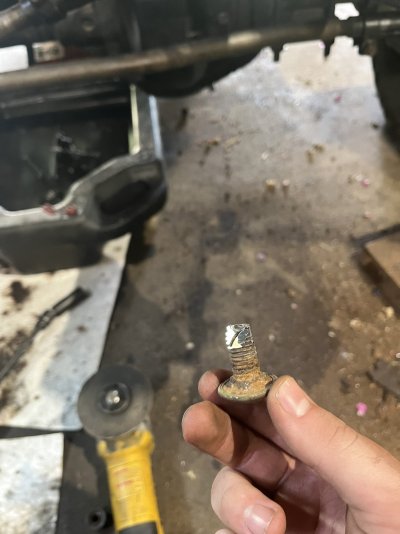
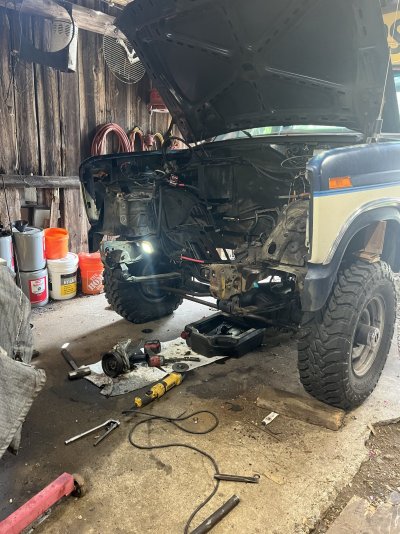
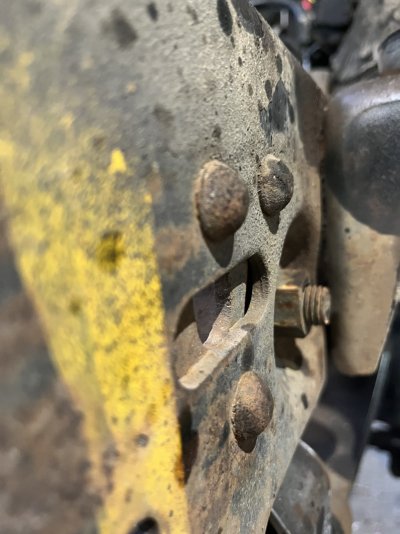
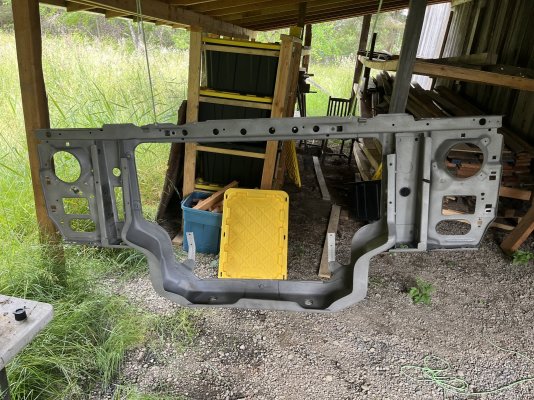
Not much has happened this week so far on the project. Iv been working on every thing but the motor. Prepping the new core support, drilling out loose leaf spring hanger rivets and cutting core support mounts out. Also going to re seal the P/S pump and replace the lines while I’m here.

I’m waiting on my 8th new exhaust valves. The eBay seller had a mix up and sent me 7 correct valves and one incorrect. Once I have the valve the heads will go to the machine shop.
 

Attachments

  • IMG_9087.jpeg
    IMG_9087.jpeg
    209.7 KB · Views: 5
  • IMG_9086.jpeg
    IMG_9086.jpeg
    477.8 KB · Views: 5
  • IMG_9088.jpeg
    IMG_9088.jpeg
    265.3 KB · Views: 5
  • IMG_9031.jpeg
    IMG_9031.jpeg
    632.5 KB · Views: 4

8769bigred

Registered User
Joined
Nov 5, 2024
Posts
46
Reaction score
20
Location
Portland Oregon
While I'm waiting on parts and machine work for this project, I thought this would be a good time to talk about the parts needed for a head gasket job / re seal


First off Gaskets.

I went with CDD full seal kit

The head gasket is branded with Fel-pros logo and seems to be of good quality. The gasket set also comes with Ford RTV, a Ford thermostat and a valley pan gaskets. It includes oil cooler O-Rings and all other gaskets. They seem to be of good quality. The oil cooler O-rings are said to be Ford but they are not the green color typically seen. The front seal that comes in the kit is a viton spring type manufactured by National. The rear main is a PTFE type seal most likely manufactured by FELPRO

On the topic of main seals, you will need sleeves for the crank in the rear and the balancer in the front.

Front Damper Sleeve is a National 99248
Rear crank sleeve is a SKF 99372

A word of caution on the rear main seal repair sleeve. It is difficult to correctly install the traditional wear sleeve with the crank in the motor. There is not enough clearance to remove the driver cap tab from the wear sleeve. I learned this the hard way and documented it in this thread on 'The Bullnose Forum' at this link

https://bullnoseforum.com/topic/12353-69-idi-rear-main-seal-leakinstallation/

I'm going to try and install it this time 'upside down'. If that does not work, I would recommend either setting the seal deeper or use FELPRO BS40697 seal kit. See above link for instructions on how that works.

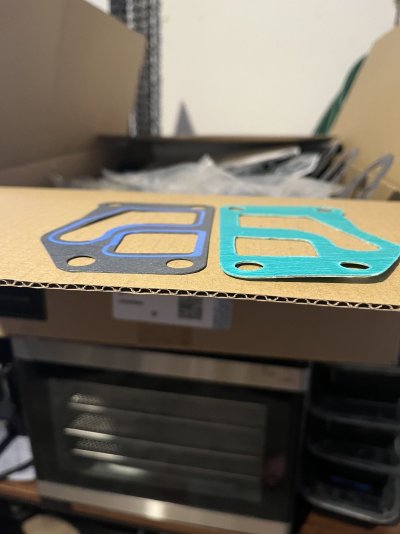
Next up is oil cooler gaskets, it seems like others have had issues with them leaking. I found 'Russ Repair' has some thicker gaskets for the oil cooler that come with Ford O-rings as well. I purchased them to compare to the CDD gaskets. The Russ gaskets (Green) measured .033 and the CDD (Grey) .016. I would imagine the thicker gasket would be less susceptible to splitting or crushing.

That about does it for seals and gaskets.
 

Attachments

  • IMG_9120.jpeg
    IMG_9120.jpeg
    213.9 KB · Views: 0
Last edited:
Top