Bad glow plug trouble

m67tang

Full Access Member
Joined
Oct 13, 2008
Posts
500
Reaction score
43
Location
lawrenceburg IN
I’ve been driving these IDIs for 20+ years and 2 trucks deep. This is my 1st time having a real problem with glow plugs, other than replacing them to fix trucks.
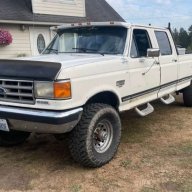
One morning I climb into my 1991 f350 and turn the key. The glow plugs relay clicks repeatedly, and never stays engaged. So, at 35*f it barely starts.

I replaced the glow plugs (motorcraft) BUT the problem persists.
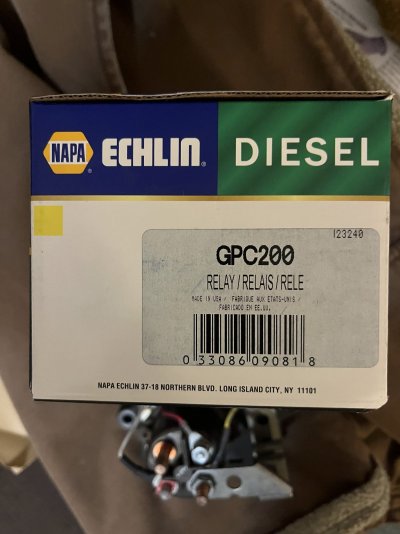
I then replace the controller (Napa-Echlin) but the problem persists. The relay only clicks.
I do all the available diagnostics. I have all the correct voltages. I test and find good grounds.
The only problem I find is resistance in the glow plugs harness that varies from .5ohm to 1.3ohm.
So I unhook the glow plug harness from the controller, as a test. I turn the key without the glow plug harness attached and STILL all I get is clicking from the relay.
If it’s a bad wire harness, why does it act the same unhooked versus hooked to my glow plugs?

I’m supposed to go bring hay bales home this week and I gotta have my truck back on the road.
 

Attachments

  • IMG_7251.jpeg
    IMG_7251.jpeg
    231.2 KB · Views: 1

Kdo58

Full Access Member
Joined
Sep 8, 2021
Posts
418
Reaction score
421
Location
Puyallup washington
I bought a glow plug controller from Napa it was bad, I just went and bought Cdd glow plug system , never had a problem since.
 

IDIBRONCO

IDIBRONCO
Joined
Feb 5, 2010
Posts
15,051
Reaction score
14,149
Location
edmond, ks
What is Cdd
Classic Diesel Designs.
I agree with Kdo. It sounds like your new controller is bad. It works off of resistance from the glow plugs. It should not act the same way with the wires unhooked. That's what makes me think that it's bad.
 

BeastMaster

Full Access Member
Joined
Feb 7, 2017
Posts
436
Reaction score
391
Location
Orange, California
In your case, the clicking, and it's the same with the wires unhooked, it's pointing to either a contactor whose contactor points are not electrically closing, or possibly significant contact resistance in the harness.

Get a voltmeter and check to see if your plugs are getting power to the bullet connector. They should be getting about nine volts assuming everything else is healthy. You will get more of some plugs are open or have bad connection. If you don't get any juice at the plugs, check the two large terminals on the contactor. One should have a large ( 6 gauge or so ) wire going to the battery. Hot at all times. Probably has a fusible link in it. Be careful around it. High current. Won't shock but sure can get hot really fast. It should have battery voltage on it at all times. Key position doesn't matter.

If you have voltage, measure the other big terminal connected to that spring-like structure ( it's a current limiting resistor that feeds the glow plugs rail ). Try to start. That entire resistor assembly should have voltage on it during start attempts when the glow plugs are supposed to be on.

If you have voltage at one pole, but not at the other, when the coil has clicked and the glow plugs are supposed to be on, then your relay has open contacts. To verify, short between the two big poles. No one else. Just the big poles. With a screwdriver and see if that brings the glow plug rail up. You can bring the truck up by manually goosing the glow plug power while a friend operates the key start. Do not hold for more than 15 seconds or so. This assumes your plugs are still good, and your contactor has bad contacts.

At least this may get you started.

This is risky. Be careful as usual and stay clear of moving things.


I had nothing but very expensive problems with supposedly factory replacement glow plug controllers.

The newer ones would quickly burn out brand new sets of glow plugs.

It appears to me that slowly but surely we are losing the skills to build things as junk sells for the same price old-school quality sells for.

I traced my situation to defective contactors that failed to open after several seemingly normal operations.

This happened twice to me. My woe started upon the replacement of the original 30 year old contactor that finally died of eroded contacts. It simply wouldn't close the circuit anymore despite going through all the motions and noises of doing so.

Replacement of the contactor was simple enough. The new contactor failed within a week. This time, shorted. Welded contacts. Would not turn off. Even if key off. Destroyed my alternator too. That piece of crap part cost me several hundred dollars and several days of chasing wild goose.

I bit the bullet and bought a brand new controller ( which came with another brand new contactor in it ).

Much to my frustration, it, too, failed within a week! Same friggin issue! Contacts welded shut. Another round of wild goose looking for unintentional glow plugs to ground shorts, monitoring currents, and watching ammeter monitors like a hawk. Nothing. Even got a battery powered oscilloscope to help if I had some sort of thermal short in one of the plugs ( that resistor strap on the contactor post makes a handy shunt resistor for monitoring current. It drops about 3 volts when fully loaded with good plugs ( 200 amperes. Eight plugs. 25 amperes each )). I was looking for spikes above 3 volts. None found.

CDD is a member here who is well aware of this fiasco in the parts supply chain. He gathers up the appropriate connectors and wire and kits up glow plug harness replacement assemblies. They do have a tendency to corrode as they carry 25 amperes per glow plug, just held in place by bullet connectors. The connector gets corroded, then it heats up, then things go downhill from there.

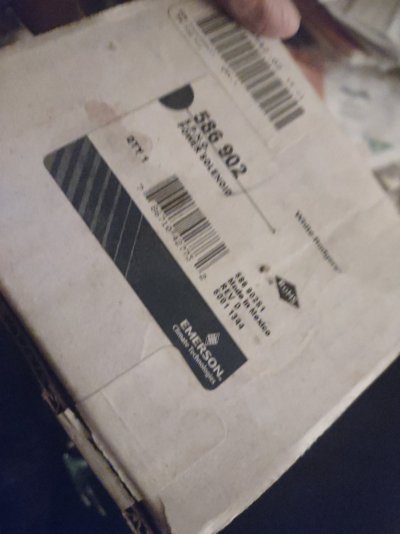
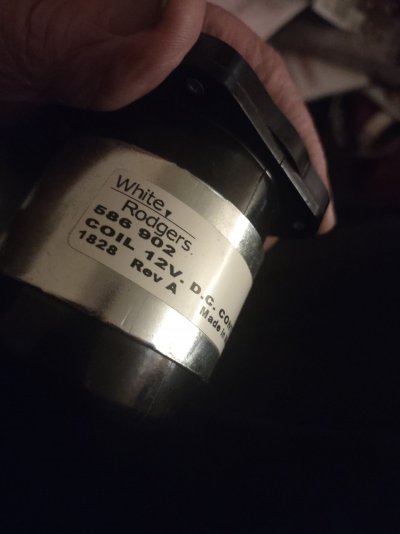
The wires and connectors were not my woe. I cleaned those up and squeezed the connectors a bit until they fit snugly on the plug. My woe was that friggin' relay! Wes sells a kit to convert the glow plugs control to a manual pushbutton ( or momentary spring-return toggle switch ) using a White-Rodgers industrial grade power contactor that has a 12 volt coil.

I believe Emerson Electric is now making them. I understand they were designed for large industrial HVAC controllers. They run about $100 to $200 /ea ( about 10x the cost of the auto parts store parts price. ). For me, well worth it as if these things fail, there are substantial cascade failure costs and lost time in goose chases

That is what I am now using. I have had absolutely no further issues with it. It is not mechanically the same size as the original relay ( It is larger and heavier. ), so you may have to rearrange some mountings to make it fit. There are many glow plug woes and cures posted in the IDI forum here. Search for them. Some of them are mine. Several years old now.

Few things are more frustrating than finicky machines when you can't trust a supposedly new part to be good.

 

Attachments

  • 17714193446447560805816907761758.jpg
    17714193446447560805816907761758.jpg
    170.9 KB · Views: 8
  • 17714194102795947192989972991698.jpg
    17714194102795947192989972991698.jpg
    119.6 KB · Views: 7
  • 17714194560006143287655927461893.jpg
    17714194560006143287655927461893.jpg
    210.2 KB · Views: 7
  • 17714195359006697167558033516608.jpg
    17714195359006697167558033516608.jpg
    170.7 KB · Views: 8
  • 1771419617629644502379160194296.jpg
    1771419617629644502379160194296.jpg
    204.7 KB · Views: 6
Last edited:

ihc1470

Full Access Member
Joined
Nov 19, 2023
Posts
255
Reaction score
178
Location
Idaho
First question I would ask is where did you get your Motorcraft glow plugs? A lot of the supposed Motorcraft plugs are actually China junk. Best way to know if you have good ones is to measure the amp draw as was mentioned above. 25 amps per plug.
 

BeastMaster

Full Access Member
Joined
Feb 7, 2017
Posts
436
Reaction score
391
Location
Orange, California
First question I would ask is where did you get your Motorcraft glow plugs? A lot of the supposed Motorcraft plugs are actually China junk. Best way to know if you have good ones is to measure the amp draw as was mentioned above. 25 amps per plug.
Yes...it's really hard to accurately measure the resistance of a glow plug with a common ohmmeter. You generally end up measuring the resistance of your test clip instead.

I found out about those counterfeit plugs too. They really got clever on printing authentic Ford Motorcraft packaging and retailing them as brand name parts on eBay and Amazon.

They look great. Problem is they didn't mimic the innards near as well as they mimicked the package.

Admittedly, I did buy some, and to this day, I believe I got snookered. It makes it really hard for me to place blame when I cannot verify the supplier. It's like trusting JavaScript in my computer. I do not have the resources to verify integrity.

I ended up testing my glow plugs with a clip-on DC ammeter fed from a piece of wire connected from the positive battery pole testing to the top bullet of each of the glow plugs ( still installed in the engine ) using the engine as the ground return. Expecting each plug to draw 25 amps ( Actually, I read about 35-45 amps each because that series resistor in the glow plug controller isn't in my test circuit. So, do not test for long. You will either get a really strong reaction, quite low, or none. If it's on the verge of burning out anyway, it will likely do it under this test, ( much as one may test a rope by yanking on it to see if it breaks ).

Personally, over the course of several weeks, I chased a similar goose to Timbuktu and back. And I am getting even.

I hope you have enough here to skewer and cook your wild goose, and get your horses fed. If there is one thing I hate to see, it's a guy working in mid winter in Indiana in the rain chasing the same wild goose I chased several years ago, while his animals are hungry.

I got this gem a few days ago and I propose it for our Brotherhood Of Oil Burner's motto:

" We may not have it all together, but together, we have it all! "
 
Last edited:

m67tang

Full Access Member
Joined
Oct 13, 2008
Posts
500
Reaction score
43
Location
lawrenceburg IN
In your case, the clicking, and it's the same with the wires unhooked, it's pointing to either a contactor whose contactor points are not electrically closing, or possibly significant contact resistance in the harness.

Get a voltmeter and check to see if your plugs are getting power to the bullet connector. They should be getting about nine volts assuming everything else is healthy. You will get more of some plugs are open or have bad connection. If you don't get any juice at the plugs, check the two large terminals on the contactor. One should have a large ( 6 gauge or so ) wire going to the battery. Hot at all times. Probably has a fusible link in it. Be careful around it. High current. Won't shock but sure can get hot really fast. It should have battery voltage on it at all times. Key position doesn't matter.

If you have voltage, measure the other big terminal connected to that spring-like structure ( it's a current limiting resistor that feeds the glow plugs rail ). Try to start. That entire resistor assembly should have voltage on it during start attempts when the glow plugs are supposed to be on.

If you have voltage at one pole, but not at the other, when the coil has clicked and the glow plugs are supposed to be on, then your relay has open contacts. To verify, short between the two big poles. No one else. Just the big poles. With a screwdriver and see if that brings the glow plug rail up. You can bring the truck up by manually goosing the glow plug power while a friend operates the key start. Do not hold for more than 15 seconds or so. This assumes your plugs are still good, and your contactor has bad contacts.

At least this may get you started.

This is risky. Be careful as usual and stay clear of moving things.


I had nothing but very expensive problems with supposedly factory replacement glow plug controllers.

The newer ones would quickly burn out brand new sets of glow plugs.

It appears to me that slowly but surely we are losing the skills to build things as junk sells for the same price old-school quality sells for.

I traced my situation to defective contactors that failed to open after several seemingly normal operations.

This happened twice to me. My woe started upon the replacement of the original 30 year old contactor that finally died of eroded contacts. It simply wouldn't close the circuit anymore despite going through all the motions and noises of doing so.

Replacement of the contactor was simple enough. The new contactor failed within a week. This time, shorted. Welded contacts. Would not turn off. Even if key off. Destroyed my alternator too. That piece of crap part cost me several hundred dollars and several days of chasing wild goose.

I bit the bullet and bought a brand new controller ( which came with another brand new contactor in it ).

Much to my frustration, it, too, failed within a week! Same friggin issue! Contacts welded shut. Another round of wild goose looking for unintentional glow plugs to ground shorts, monitoring currents, and watching ammeter monitors like a hawk. Nothing. Even got a battery powered oscilloscope to help if I had some sort of thermal short in one of the plugs ( that resistor strap on the contactor post makes a handy shunt resistor for monitoring current. It drops about 3 volts when fully loaded with good plugs ( 200 amperes. Eight plugs. 25 amperes each )). I was looking for spikes above 3 volts. None found.

CDD is a member here who is well aware of this fiasco in the parts supply chain. He gathers up the appropriate connectors and wire and kits up glow plug harness replacement assemblies. They do have a tendency to corrode as they carry 25 amperes per glow plug, just held in place by bullet connectors. The connector gets corroded, then it heats up, then things go downhill from there.

The wires and connectors were not my woe. I cleaned those up and squeezed the connectors a bit until they fit snugly on the plug. My woe was that friggin' relay! Wes sells a kit to convert the glow plugs control to a manual pushbutton ( or momentary spring-return toggle switch ) using a White-Rodgers industrial grade power contactor that has a 12 volt coil.

I believe Emerson Electric is now making them. I understand they were designed for large industrial HVAC controllers. They run about $100 to $200 /ea ( about 10x the cost of the auto parts store parts price. ). For me, well worth it as if these things fail, there are substantial cascade failure costs and lost time in goose chases

That is what I am now using. I have had absolutely no further issues with it. It is not mechanically the same size as the original relay ( It is larger and heavier. ), so you may have to rearrange some mountings to make it fit. There are many glow plug woes and cures posted in the IDI forum here. Search for them. Some of them are mine. Several years old now.

Few things are more frustrating than finicky machines when you can't trust a supposedly new part to be good.
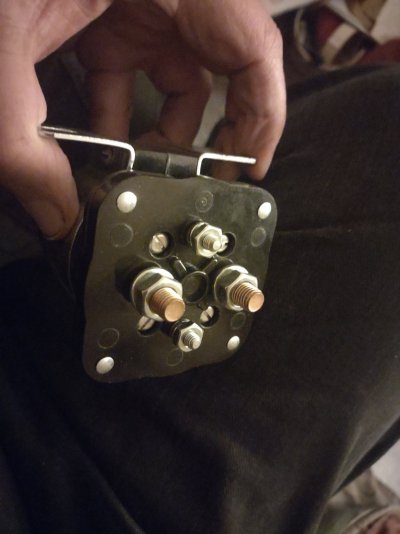
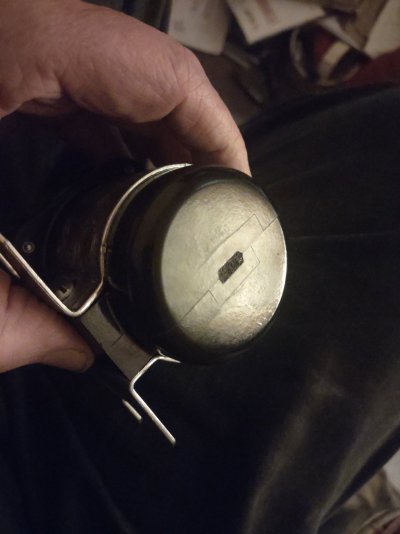
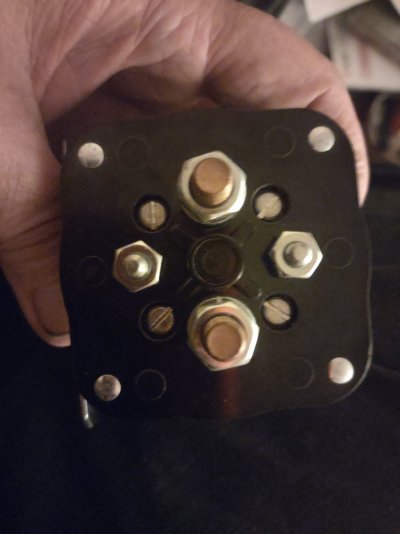
That big relay you have in the pics is what I have on my PSD. And it came off a previous IDI that I had 10 years ago. Those don’t fail.
With your push button glow plugs, which side, negative or positive, goes to the button?
 

Kdo58

Full Access Member
Joined
Sep 8, 2021
Posts
418
Reaction score
421
Location
Puyallup washington
I bought a genuine warn winch solenoid, I figured a winch solenoid would be heavy duty. I just took
You must be registered for see images attach
my ohm meter to the small bolts to figure which was the ground.
 

BeastMaster

Full Access Member
Joined
Feb 7, 2017
Posts
436
Reaction score
391
Location
Orange, California
That big relay you have in the pics is what I have on my PSD. And it came off a previous IDI that I had 10 years ago. Those don’t fail.
With your push button glow plugs, which side, negative or positive, goes to the button?
Ground goes the button.

The two smaller terminals on the contactor are the coil.

One terminal is connected to the ignition key circuit that is powered ON when the key is in RUN. The other terminal is brought to ground through your pushbutton to complete the circuit and energize the coil.

The coil circuit for this contactor only draws 1/2 amp or so. So you don't have to use really heavy wire or finicky grounds. My ground is wired to where I had mounted my contactor to the engine block using the same holes the original glow plug control module mounted to.

I've had the same experience with how rugged ( and hermetically sealed ) the White-Rodgers contactor is and why I back Wes ( CDD ) on his products. I have built those contactors in to many things. Including things controlling microwave ovens, ranges, household HVAC, and air compressors. Mostly for safety lockouts, as I never know if a "Solid State Relay" block will fail ON if lightning strikes a power line, and I am not willing to chance an appliance failing ON because lightning struck a nearby power line. I want an old-school air-gap, not a reverse-biased PN junction, between Edison and my expensive and fire-prone machinery.

I flat do not trust this modern stuff.

It has to be reliable. For me, that contactor is good for both house and van.
 
Top