Another charging problem...

jonleroy2506

Registered User
Joined
Jan 20, 2020
Posts
75
Reaction score
14
Location
Spirit Lake ID
Hey all,

I have a 1990 7.3 that isn't charging well. I have to jump it every 2 or 3 days. I've been researching and working on it for hours, and don't seem to be getting anywhere. Electricity isn't my strong point for sure

The alternator is just over a year old. The batteries are brand new, and I just replaced 3 of the 4 battery terminals. The voltage regulator is also brand new.

I put new spade connectors on the 2 little wires that run to the alternator, it seems as thought there used to be a factory connector there, but that is long gone and the wires each have a female spade on them.

At idle, the batteries show about 12.7 volts, and the alternator shows about 12.8. I'm at a total loss for what to do next. Any ideas would help

The one thing I haven't checked yet, as far as I can tell is the fusible link in the power output from the alternator.

Is the alternator shot? Or the new voltage regulator?

I am aware of the the 3g alternator upgrade, which I fully intend to do soon. I have a bonus check coming from work at the end of January, and I plan to do that upgrade then. I need the truck until then, and if there's a wiring issue I can fix to keep it together for the next month and a half, that would be awesome.

Last note, the alternator tested good at O'Reilly's. Not sure if that's helpful or means anything.

Thanks

 

Cubey

Van dweller
Joined
Oct 18, 2017
Posts
4,745
Reaction score
2,021
Location
USA
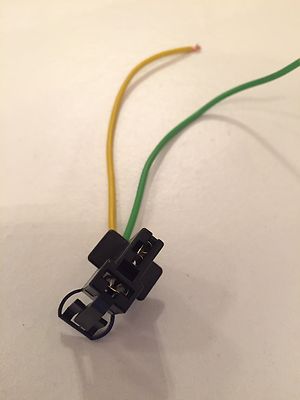
Here's a replacement pigtail.


If the wires going to that connector aren't connected to the alternator properly, it won't charge.

Also, 1g alternators have an external voltage regulator, so it's possible that's bad. It's a metal box somewhere on the passenger side near the battery. On the wheel well I think.
 
As an eBay Associate we earn from qualifying purchases.

asmith

Full Access Member
Joined
Jan 28, 2012
Posts
836
Reaction score
376
Location
Atascadero, Ca
I would think if you are having to jump your batteries, so your batteries are low, and it is only showing 12.7 at idle then your alternator is not putting out enough. It should be higher than that.

other thought is maybe your batteries are ok and your starter is going out or the connection to the starter is bad.

But it does sound like and alternator problem to me, the output is to low for batteries that are supposedly drained.
 

tradergem

Full Access Member
Joined
Oct 3, 2007
Posts
263
Reaction score
129
Location
Arizona
Have you checked for a drain on the batteries when the key is off? I had that problem with a transmission relay that was stuck in the on position draining my batteries over night.
 

Kizer

Full Access Member
Joined
Mar 22, 2007
Posts
831
Reaction score
409
Location
Denton, Texas
12.7V might not be an issue, for a first gen alternator, at idle. That's the primary reason for the 3g "upgrade".

I'd be looking for parasitic draw.
Disconnect BOTH negative (-) battery terminals. Use a test light from battery ground (-) to a solid ground (engine, body or earth).
If the light comes on, you have a draw.
Unplug the the fuses and relays until the light doesn't come on...That will be the circuit that requires attention.
 

jonleroy2506

Registered User
Joined
Jan 20, 2020
Posts
75
Reaction score
14
Location
Spirit Lake ID
Thanks for all the thoughts. I'm headed to town tonight for a voltage regulator wiring harness, figure I'll pull the alternator and get it tested just to confirm that's it's functioning properly. Once I get that all put back together I'll have to try that test for a parasitic draw.

UPDATE: I completely replaced all of the alternator wiring, including the output wire and fusible link. New connectors on both ends, new voltage regulator, and direct ground's from both voltage regulator mounting bolts to the negative battery terminal. Voltage readings are as follows:

Idle acc off: 13.4 at alternator, 13.31 at battery
High idle (1000 rpm) acc off: 14.28, 14.121
Idle acc on: 13.07, 12.95
High idle (1000 rmp) acc on: 13.86, 13.72

This seems right, I think. Interestingly, the alternator failed testing at AutoZone today. Didn't want to buy a new one, as I'm planning to do the 3g upgrade ASAP. I suppose a new alternator could increase these numbers

I'll check for parasitic draw tomorrow, 5 hrs working in 30* weather is enough for me for one day :)

The voltage gauge needle in the dash doesn't even point to the 'n' in normal. Not sure what that means, I've never trusted the stock gauges anyways. I'm planning to put an aftermarket voltage gauge in within the month
 
Last edited:

jonleroy2506

Registered User
Joined
Jan 20, 2020
Posts
75
Reaction score
14
Location
Spirit Lake ID
Kizer, using the test light for a parasitic drain wouldn't work if there are multiple circuits with a drain, right? It seems to me the light could stay on when you pull the fuse of a bad circuit if there's another bad circuit. Is that accurate? I have a multimeter, and it looks like you can do a drain test by checking for a drop in amps when pulling fuses.

What are the steps to test with a multimeter?
 

ihc1470

Full Access Member
Joined
Nov 19, 2023
Posts
255
Reaction score
178
Location
Idaho
While it is possible that you may have multiple circuits you can still find the issue using just a test light. Keep in mind that you probably will have some draw on the system when everything is working correctly. Things such as keep alive memory in the radio, especially if it is a digital aftermarket radio. Make youself a diagram of the fuse panel or take a couple of pictures. Pull all the fuses and see where you are with draws. If you still have an issue I would disconnect the wiring at the alternator and retest. Then one at a time install a fuse and check that circuit. If no drain you could leave that fuse installed go to the next until you find the circuit lighting up the test light. When you find that one remove that fuse and continue on to see if there are other circuits that have draws. Once you have determined which circuits have issues then you can form a plan to repair.

I usually use a test light to locate and then switch to amp meter to determine how much. Normal usually is 50 to 85 milliamps.

Suspect circuits will be like the glove box light if it has one or hood light. Digital radios always have a slight draw on the system.
 

Kizer

Full Access Member
Joined
Mar 22, 2007
Posts
831
Reaction score
409
Location
Denton, Texas
Kizer, using the test light for a parasitic drain wouldn't work if there are multiple circuits with a drain, right? It seems to me the light could stay on when you pull the fuse of a bad circuit if there's another bad circuit. Is that accurate? I have a multimeter, and it looks like you can do a drain test by checking for a drop in amps when pulling fuses.

What are the steps to test with a multimeter?
It will work.
The process of elimination rarely fails.

In most cases, the level of illumination, of the test light, will indicate the "quality" of the draw.
So, while pulling fuses and relays, if the light is still lit but not as brightly as before ... keep pulling fuses and relays

The multimeter may, in fact, be more efficient ... I'm not sure how to use one that way.
 

Kizer

Full Access Member
Joined
Mar 22, 2007
Posts
831
Reaction score
409
Location
Denton, Texas
While it is possible that you may have multiple circuits you can still find the issue using just a test light. Keep in mind that you probably will have some draw on the system when everything is working correctly. Things such as keep alive memory in the radio, especially if it is a digital aftermarket radio. Make youself a diagram of the fuse panel or take a couple of pictures. Pull all the fuses and see where you are with draws. If you still have an issue I would disconnect the wiring at the alternator and retest. Then one at a time install a fuse and check that circuit. If no drain you could leave that fuse installed go to the next until you find the circuit lighting up the test light. When you find that one remove that fuse and continue on to see if there are other circuits that have draws. Once you have determined which circuits have issues then you can form a plan to repair.

I usually use a test light to locate and then switch to amp meter to determine how much. Normal usually is 50 to 85 milliamps.

Suspect circuits will be like the glove box light if it has one or hood light. Digital radios always have a slight draw on the system.
Lol ... you posted while I was typing and re-typing
 

jonleroy2506

Registered User
Joined
Jan 20, 2020
Posts
75
Reaction score
14
Location
Spirit Lake ID
Awesome, I'll see what I can find. I do have an aftermarket radio, so I suppose there will be some expected draw from that. If I check battery voltage with the key off engine off at night, then recheck i. The morning, would that provide any valuable information? After working on the truck yesterday it fired right up this morning in below freezing temps without the block heater plugged in, I ran the glow plugs for about 15 seconds, there was still plenty of juice to turn the starter real quick. I'll give it a couple more cold morning starts, but I'm not super worried about a drain at this point.
 

ihc1470

Full Access Member
Joined
Nov 19, 2023
Posts
255
Reaction score
178
Location
Idaho
Hey all,
The alternator is just over a year old. The batteries are brand new, and I just replaced 3 of the 4 battery terminals. The voltage regulator is also brand new.


Not sure if you ever found your issue or not. Reading throw this I noticed you have built in an issue that in time will cause you some issues. I am guessing you have used bolt on terminals. While they will work for awhile in time they will corroided and leave you stranded.
 

franklin2

Full Access Member
Joined
Feb 24, 2009
Posts
5,658
Reaction score
1,917
Location
Va
Awesome, I'll see what I can find. I do have an aftermarket radio, so I suppose there will be some expected draw from that. If I check battery voltage with the key off engine off at night, then recheck i. The morning, would that provide any valuable information? After working on the truck yesterday it fired right up this morning in below freezing temps without the block heater plugged in, I ran the glow plugs for about 15 seconds, there was still plenty of juice to turn the starter real quick. I'll give it a couple more cold morning starts, but I'm not super worried about a drain at this point.
The draw from the radio memory and any other electronics (like the computer for a E4OD) will not have enough draw to light a conventional testlight.

On these trucks when doing the testlight draw test (or using a ammeter also) you need to disconnect the negative on both batteries. The factory hooked most smaller circuits to the pass side battery but some people are like me, add aftermarket stuff to the driver's side battery. If you only disconnect one negative cable, the testlight will not pick up any draws on the other battery.
 
Last edited:

franklin2

Full Access Member
Joined
Feb 24, 2009
Posts
5,658
Reaction score
1,917
Location
Va
P.S. Looks like Autozone was trying to sell you a new alternator. If you would have took your batteries in, they probably would have said they are weak also. Sad world we live in today.
 

divemaster5734

Full Access Member
Joined
Aug 23, 2009
Posts
405
Reaction score
324
Location
Olympia, Washington
Hey all,

I have a 1990 7.3 that isn't charging well. I have to jump it every 2 or 3 days. I've been researching and working on it for hours, and don't seem to be getting anywhere. Electricity isn't my strong point for sure


Thanks
If you have a meter that can read DC amps it will help immensely.
Volts are only one of three facets.
I found a decent cheap meter HERE for $29.
With everything off you can check to see if there's something draining the battery while it's not in use, then you can check the amp output at idle and at higher RPM's.
I had the same issue on a '90 E350 that turned out to be the external regulator.
If you have a gauge on your dash that shows the charge rate while running that's called an ammeter, and the charging system is wired differently than a vehicle that doesn't have one.
My rig drained the batteries in about two days of sitting.
It turned out the external regulator was bad.
I might have smoked it due to installing the alternator to a non-ammeter diagram.
That meter I linked is not super accurate, but it doesn't have to be.
You'll pull around 6-11 amps at idle and around 15-20 at 2k RPM, depending on how long it's been running since you started it.
If you disconnect both positive battery terminals while leaving both negative ones connected, then watch and listen closely as you touch one positive cable to a battery, you may well see and hear a small arc as it touches.
That will tell you if there's something draining the battery when the truck is turned off.
Another telling sign it's probably the external regulator is if the alternator belt has a lot of wobble even if it's tight, while the power steering and AC belts don't have excessive wobble.
That tells you the regulator is pulling full current from the alternator.
Mine was taking 97 amps at 2k RPM before I swapped out the reg.
 
As an Amazon Associate we earn from qualifying purchases.

Forum statistics

Threads
92,996
Posts
1,155,931
Members
26,574
Latest member
sramasya

Members online

No members online now.
Top