Cavitation in 6.9 vs 7.3?

trj

MPG
Joined
Jul 24, 2008
Posts
72
Reaction score
0
Location
Colorado
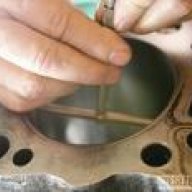
In Eric Williams' Q&A article on cavitation under one of the questions (Q: How come some diesel engines seem to be immune to cavitation?), it seems to indicate the 6.9 is pretty much immune to the problem due to thicker cylinder walls. Is that true in practice, is this something that is generally accepted as not a concern in the 6.9 IDIs?
Thanks,
Tom
 

F350farmboy

The Hornet
Joined
Nov 27, 2008
Posts
373
Reaction score
0
Location
N.E Ohio
Im not too worried about cavitation on my 6.9. Mostly because of the cylinder walls being .110" thicker.

Think of it this way...Depending on owner periodic maint., A 7.3 will last between 300k-500k(?????) miles before they get affected (I know, some happens sooner and some never get infected), just imagine how many more miles it will take to go through another .110" of metal?

^^^At least thats how I look at it, and it works for me so it doesnt matter what you guys say....im gonna keep thinking that LOL
 

typ4

Full Access Member
Joined
Dec 24, 2005
Posts
9,131
Reaction score
1,431
Location
Newberg,OR
It has also to do with the harmonics of the thinner cylinders also not just corrosion, I have never seen a 6.9 cavitated.
 

yARIC008

Drives really slow
Joined
Jan 12, 2005
Posts
1,703
Reaction score
110
Location
Orlando, FL
I recently read in another article that the 7.3L walls were measured to move .004" during combustion of the fuel. Doesn't seem like much but that is probably well enough to cause the water/coolant to cavitate. I wonder how much the 6.9L walls move. Probably far less.

But the answer pretty much, in the past like.. 6-7 years I've heard of one supposed 6.9L cavitating. Meanwhile I've heard of countless 7.3s. Me having two.
 

swampdigger

Full Access Member
Joined
Nov 20, 2006
Posts
436
Reaction score
0
Location
usa
I recently read in another article that the 7.3L walls were measured to move .004" during combustion of the fuel. Doesn't seem like much but that is probably well enough to cause the water/coolant to cavitate. I wonder how much the 6.9L walls move. Probably far less.

But the answer pretty much, in the past like.. 6-7 years I've heard of one supposed 6.9L cavitating. Meanwhile I've heard of countless 7.3s. Me having two.

Interesting, I think that really explains it. Previously I had thought the thicker walls just took longer to erode. Rather, as you put it, they just don't get shakin', and the cavitation is nipped in the bud at that.

Haha, papabear, let's hear this...
 

Agnem

Using the Force!
Joined
Jan 10, 2005
Posts
17,067
Reaction score
386
Location
Delta, PA
I don't think 6.9's are immune to cavitation. I just think most of them go to scrap before being run long enough for a symptom to develop. I run the additive so I can sleep at night. LOL
 

icanfixall

Official GMM hand model
Joined
Apr 10, 2005
Posts
25,858
Reaction score
682
Location
West coast
I read somewhere that most large diesel motors can cavatate over long run times. Cat use a SCA in their cooling systems to fight time. I have not seen this but I have read this so don't everybody flame me for reading it...;p
 

Agnem

Using the Force!
Joined
Jan 10, 2005
Posts
17,067
Reaction score
386
Location
Delta, PA
I don't think anybody would disagree with that. Cummins has been one of the more vocal about cavitation problems and preventing it. I'm pretty sure they own the company that invented the DCA-4 stuff.
 

Latest posts

Forum statistics

Threads
93,029
Posts
1,156,233
Members
26,618
Latest member
Nathanelliott44

Members online

Top